
The exercise showdown: HIIT vs endurance training? A Stanford lab maps the molecular changes
By Kristy Hamilton
A Stanford study of more than 1,500 blood samples is asking what kind of molecular changes happen with high-intensity interval training (HIIT) and endurance exercise.
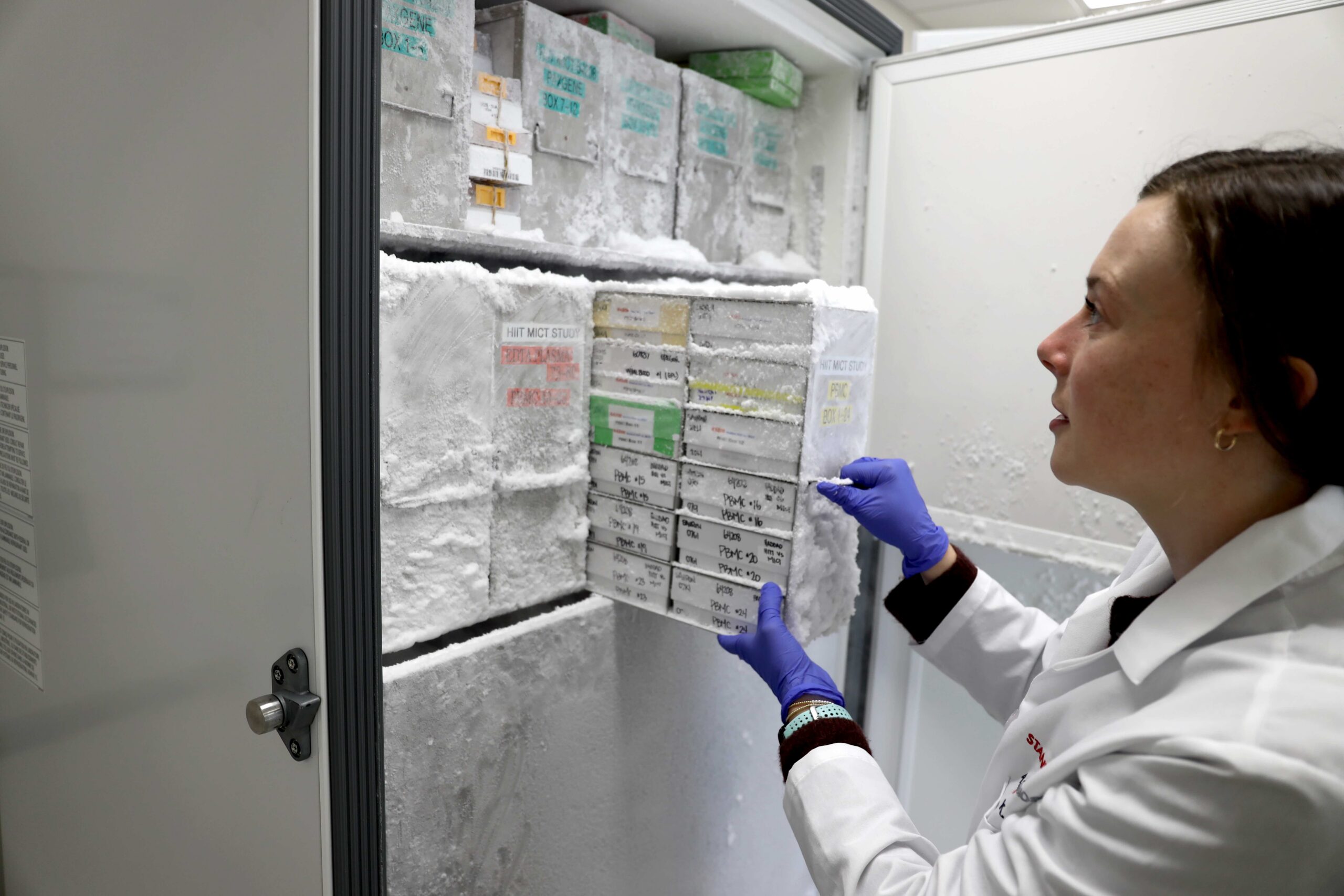
Aubrey Roberts ran cross country and track at Northwestern University, and even now, deep into a Stanford PhD, she laces up six days out of seven. So when her doctoral advisor floated a study idea built around high-intensity interval training (HIIT) effort rather than the long, steady miles she loves, she was, by her own admission, a skeptic.
“I was kind of like, HIIT? Sure, we can study that,” she recalled. Her loyalty ran to endurance running, but she knew “studies have seen a lot of benefits from HIIT.”
Most people already know that moving is good for them. What Roberts wants to know is far more precise: Does the kind of exercise you do change what happens inside your body? Does it change which genes switch on? Which proteins and metabolites are in the blood? How do muscles and fat remodel?
And the question with the most practical takeaway: For someone with limited time, how does 12 1-minute intervals at high-intensity measure up against 40 minutes of endurance training, or more specifically moderate-intensity continuous training (MICT).
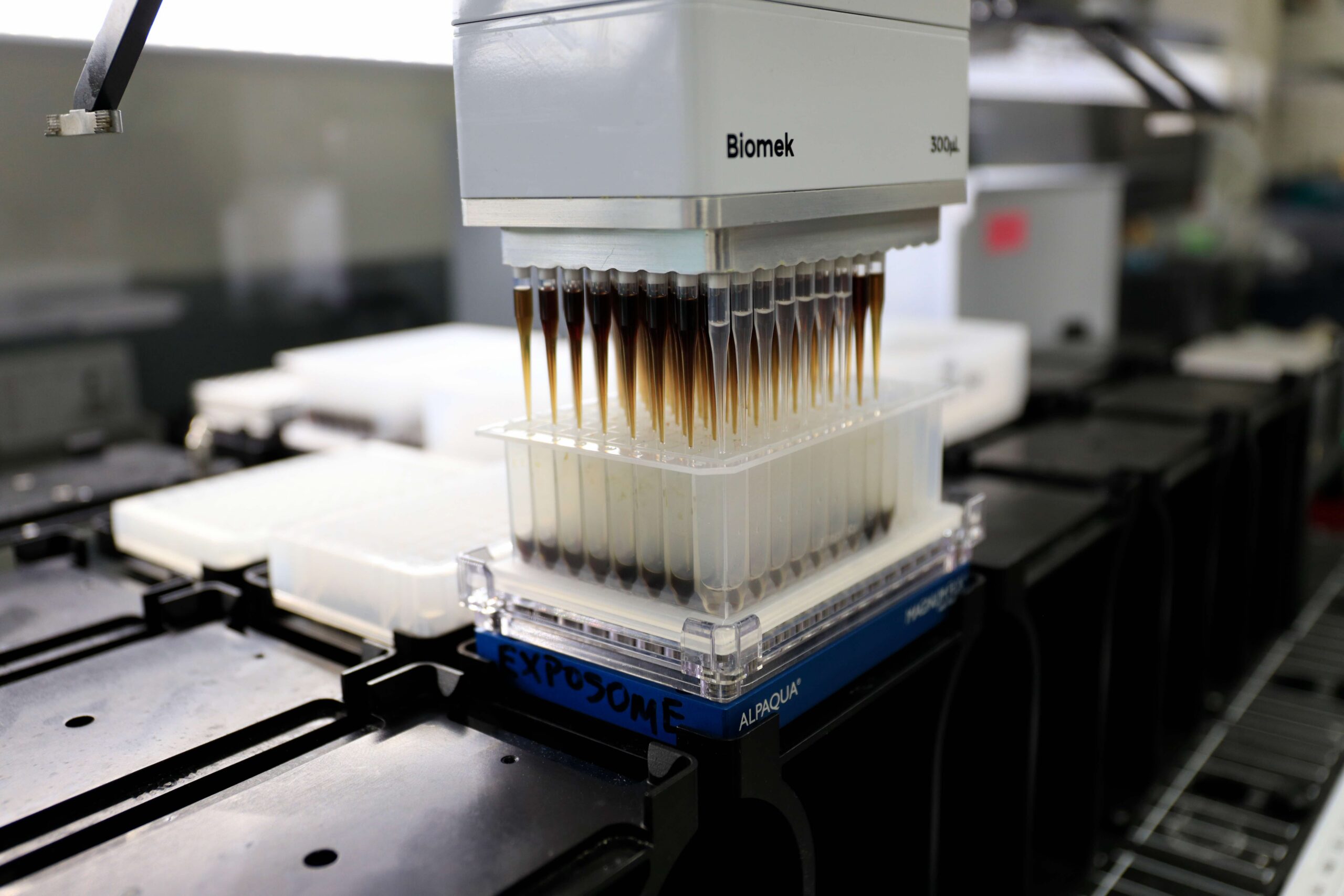
More than 1,500 blood samples, along with 33 muscle and 37 fat biopsies, were collected to study the body’s molecular response to exercise. Credit: Kristy Hamilton, Wu Tsai Human Performance Alliance
An unsettled question in exercise science
The hunch that hard yet brief effort does more for the body than moderate, long exercise is not new. A 2015 meta-analysis of healthy adults found that both interval training and steady endurance work improved cardiorespiratory fitness, but the gains were larger after intervals.
Yet the literature is divided. In other studies the gains narrow or disappear. A randomized trial in patients with heart failure found that intervals were no better at improving aerobic capacity than moderate training. A 2023 meta-analysis in women found the picture more complicated: in younger women, moderate training and longer intervals improved the VO2max fitness metric more than short intervals did, while in older women the differences largely disappeared.
Part of the trouble is that the labels are slippery (“endurance,” “moderate continuous,” “HIIT”), with each term stretched over wildly different protocols. Also, many studies just measure fitness scores like VO2max, weight, and blood pressure. What many of these studies can’t explain is why there is a difference. Which molecular signals does HIIT or MICT trigger? In which tissues does this happen? That is the black box of exercise where Roberts’s study begins.
Building the experiment
“I’ve always loved running,” she said, “but I didn’t really know that studying human performance was even possible until the end of college.”
That’s when she met Stanford geneticist Michael Snyder, who was interested in launching a large exercise study, and Francois Haddad, a cardiologist at Stanford Medicine. They began workshopping what would become her dissertation. The team zeroed in on a head-to-head comparison of HIIT and MICT.
They recruited sedentary adults who are not athletes, and randomized them into one of three groups: HIIT, MICT, or a sedentary control. The two exercise groups trained three times a week for 12 weeks.
The two workouts were built to be comparable in commitment but feel nothing alike. HIIT participants built up to 12 intervals a session, repeatedly alternating between a minute of hard effort at 70-90% of their heart rate reserve (HRR) and a minute of recovery, repeated for a total of about 12 minutes of exertion. MICT participants built up to a steady 40-minute session at a much lower intensity (45-55% HRR)
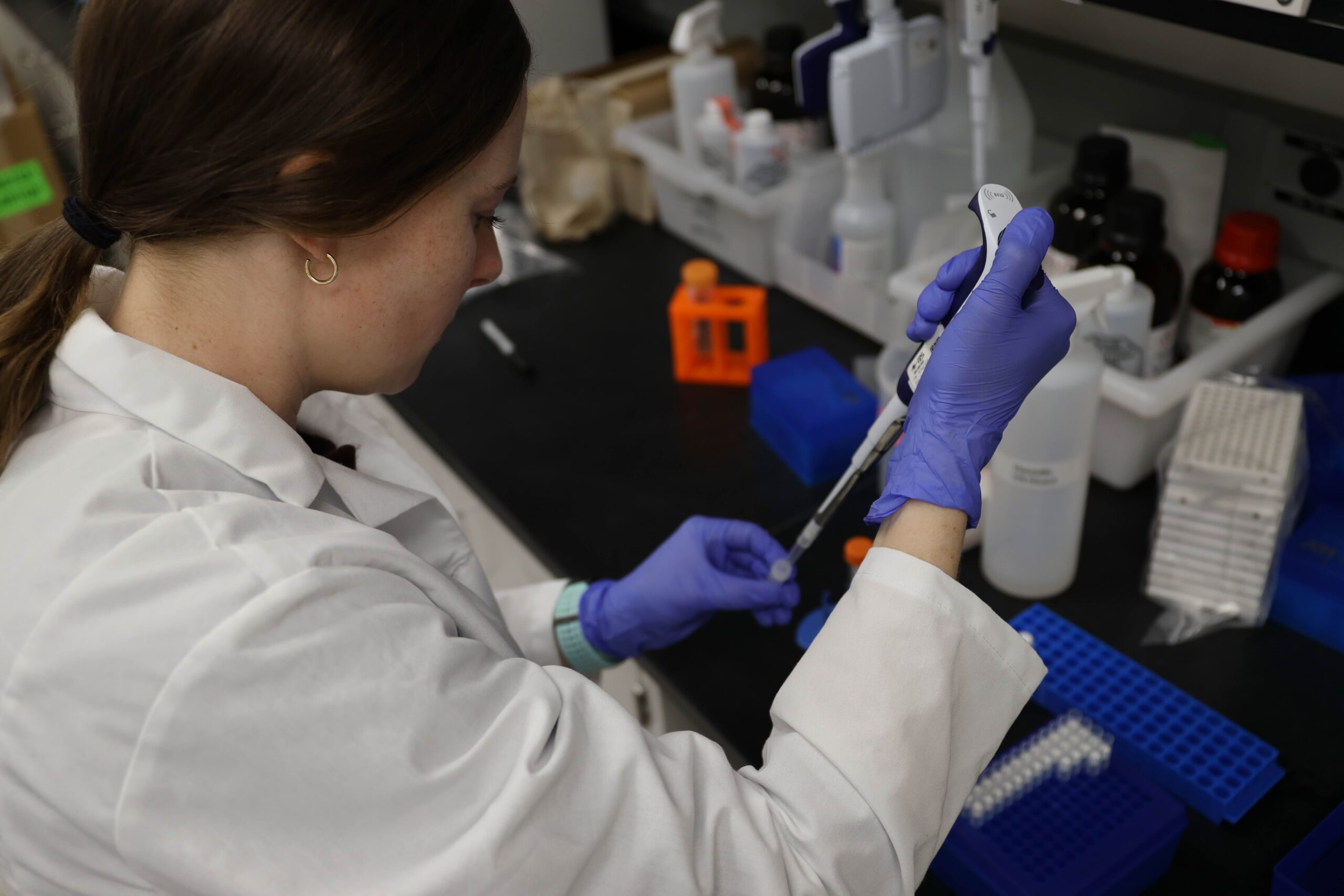
Roberts mixes reagents used to extract RNA from blood samples. Credit: Kristy Hamilton, Wu Tsai Human Performance Alliance

What’s the most difficult part of this study?
Keeping 100 people moving for three months, said Roberts. “It takes a lot of effort. You have to be willing to encourage people a little.” One participant nearly quit during finals week, but gentle motivation helped keep them in the study. In total, Roberts and the team spent 2.5 years collecting all the data.
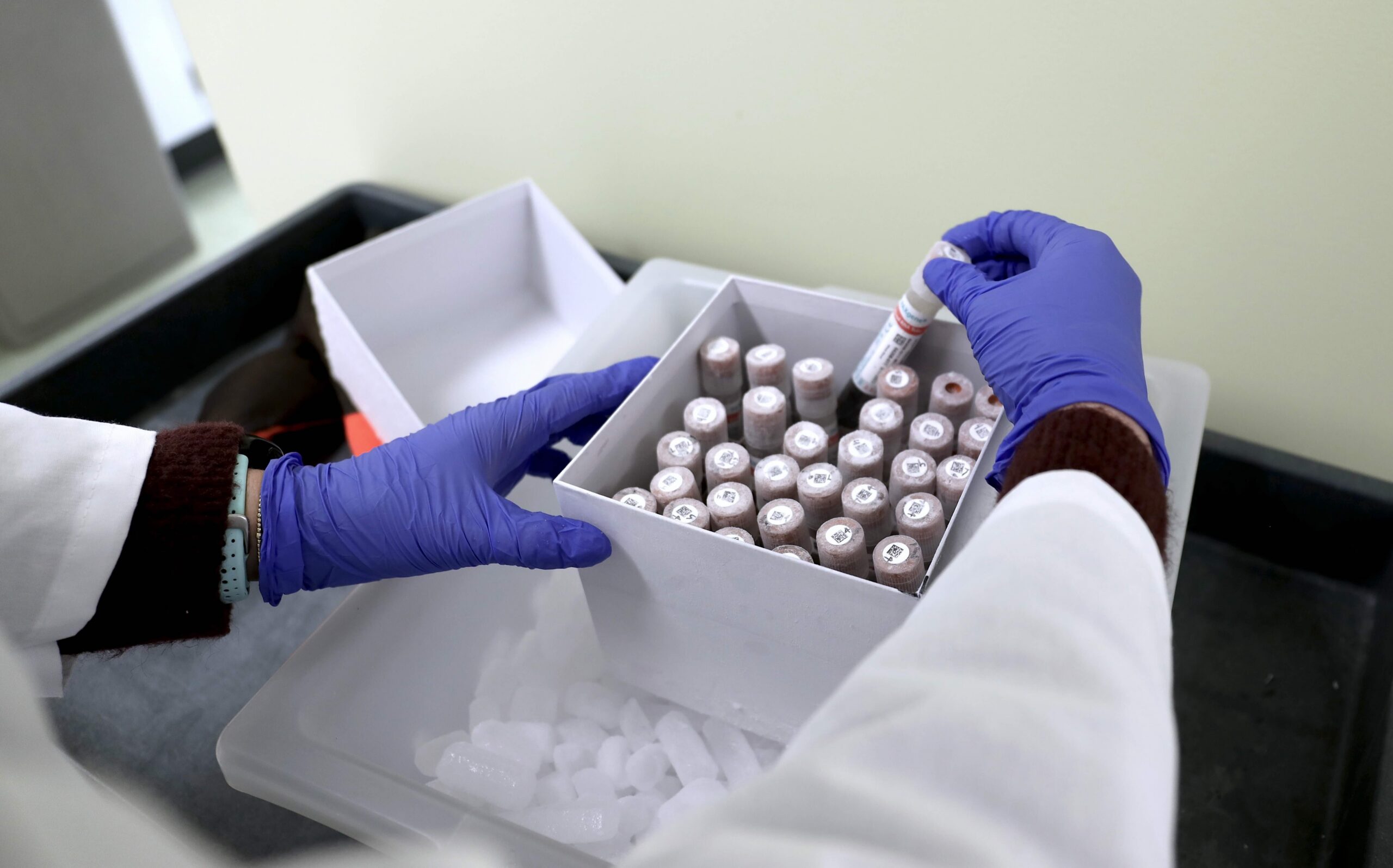
Roberts’ team and the study nurses drew blood from the participants before their exercise, then a series of draws at multiple timepoints during recovery. From a smaller pool of participants, they also collected muscle and fat biopsies. Muscle is an obvious place to look, but fat is a metabolic organ too, and the team wanted to see whether it changes composition with training.
The team has banked more than 1,500 blood samples, along with urine and stool, and 33 muscle and 37 fat biopsies. Throughout, participants wore heart-rate monitors and other wearables so the team could remotely confirm that people were hitting their exercise targets.
From each sample, the team is analyzing multiple molecular layers, from RNA to proteins, metabolites, and lipids. “We think all exercise is good,” said Roberts, “but it might not function the same way. The genome is static, but yet all of these other molecular layers can change and may give us clues as to how different types of exercise impact our body.”
Molecules worth watching
Some of those molecules already have names. In 2022, a Stanford lab led by Alliance faculty member Jonathan Long reported in Nature that a compound called Lac-Phe is among the metabolites that rise the most in the blood after exercise, and that in obese mice it curbs appetite, lowering their weight and body fat. The molecule also appears in exercising humans and racehorses, but its effects on human body fat is unknown.
In Long’s study, he found that sprinting triggered more Lac-Phe than endurance exercise, and another study found moderate exercise barely impacted it at all. Roberts is working with Long to test whether the size of a person’s Lac-Phe spike after one workout predicts how much fitness they gain, and how much fat they lose, over 12 weeks.
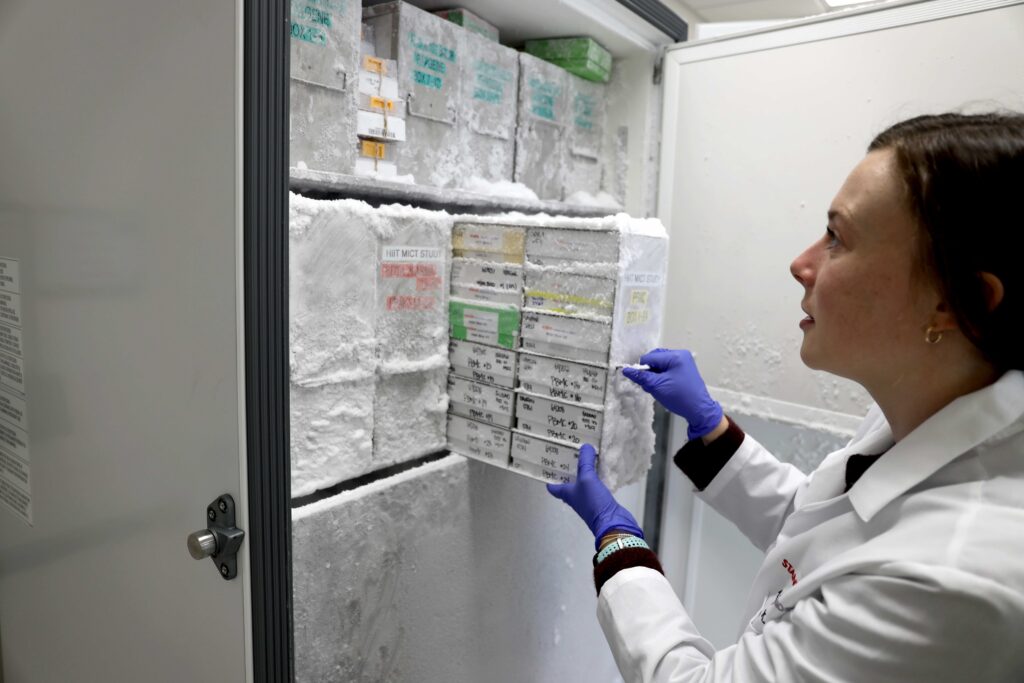
The team stores the blood, muscle, and fat samples in a freezer. Credit: Kristy Hamilton, Wu Tsai Human Performance Alliance
Roberts’ experiment by the numbers
90 participants
12 weeks of exercise
3 workouts/week
1,500+ blood samples
33 muscle biopsies
37 fat biopsies
Just the beginning
The results are still coming in, and Roberts is careful not to get ahead of the data. But an early theme has emerged: In the team’s VO2max measurements, larger gains are tracked with higher-intensity effort. It echoes the findings of the 2015 meta-analysis. It’s a preliminary signal rather than a verdict, and the full molecular story is still unfolding.
Of course, all of this assumes you’re after maximum benefit in the least amount of time. Anyone training for a marathon or an endurance sport still needs to put in the long sessions.
In the meantime, for Roberts, the running doesn’t stop. She trains under a coach, saves her hardest efforts for the weekends, and has her eye on new distances, including her first 25K trail race. The gritty, community culture of trail running intrigues her. “I’m excited to see what it’s like,” she said.
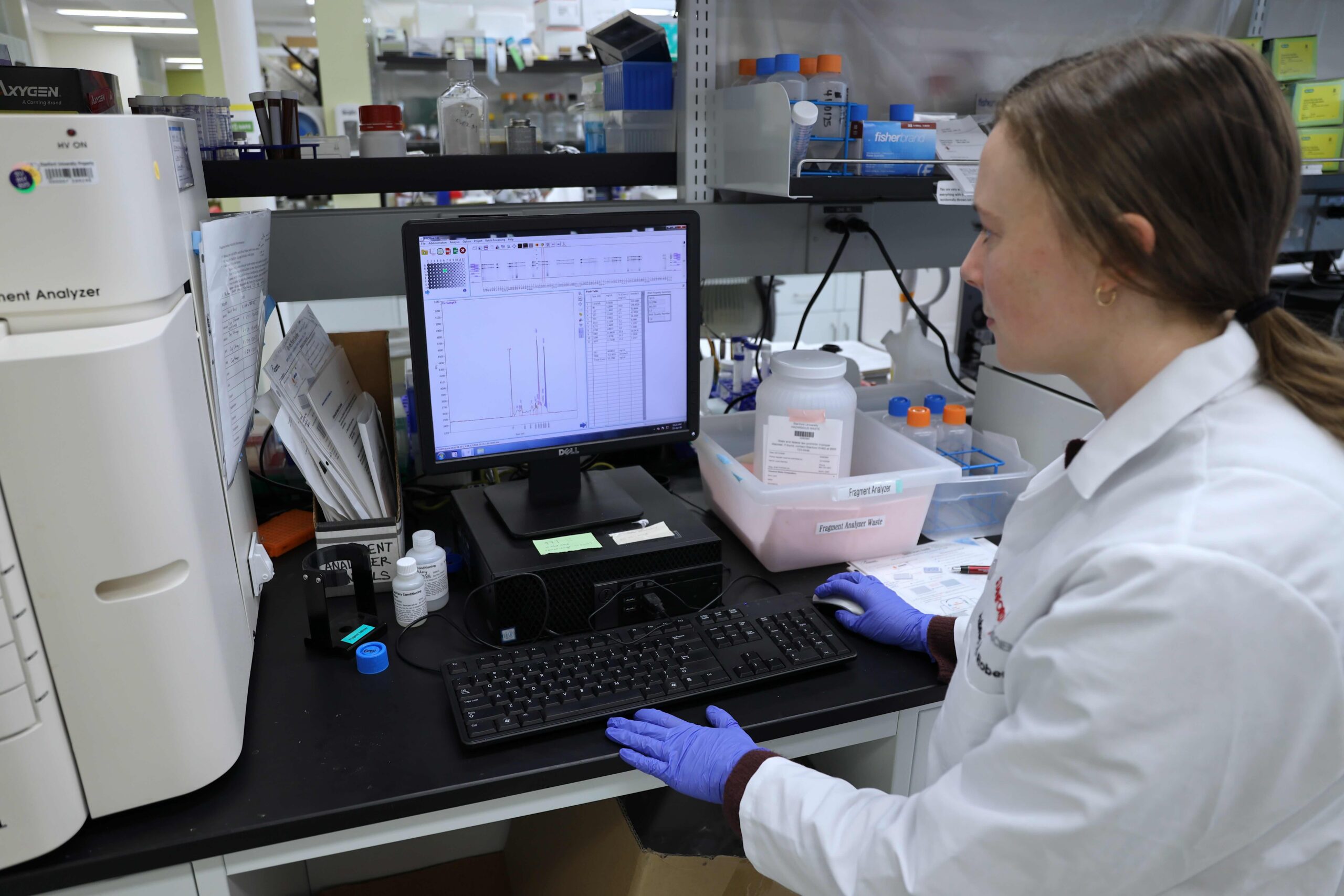
Aubrey Roberts and her team are actively working to analyze the results from their study. Credit: Kristy Hamilton, Wu Tsai Human Performance Alliance
It takes a team to run a study of this size. Roberts expresses special thanks to all of the participants, coordinators, exercise physiologists, lab members, and staff at the Clinical Translational Research Unit.
This project is part of the Wu Tsai Human Performance Alliance Molecular Athlete Moonshot.
Latest News
October 5, 2026
The exercise showdown: HIIT vs endurance training? A Stanford lab maps the molecular changes

September 8, 2026
A wearable device tracked over 42,000 menstrual cycles. Here’s what researchers found

August 24, 2026
Register for Wu Tsai Human Performance Alliance 2026 Research Symposium
Get Engaged
We invite faculty, students, staff, alumni, friends, and external organizations to participate in the Wu Tsai Human Performance Alliance at Stanford.