
Four key nutrition strategies for women in sport
By Kristy Hamilton
Four evidence-based nutrition strategies for female athlete performance, presented at the inaugural Female Athlete Research Meeting at Stanford, hosted by the Wu Tsai Human Performance Alliance.
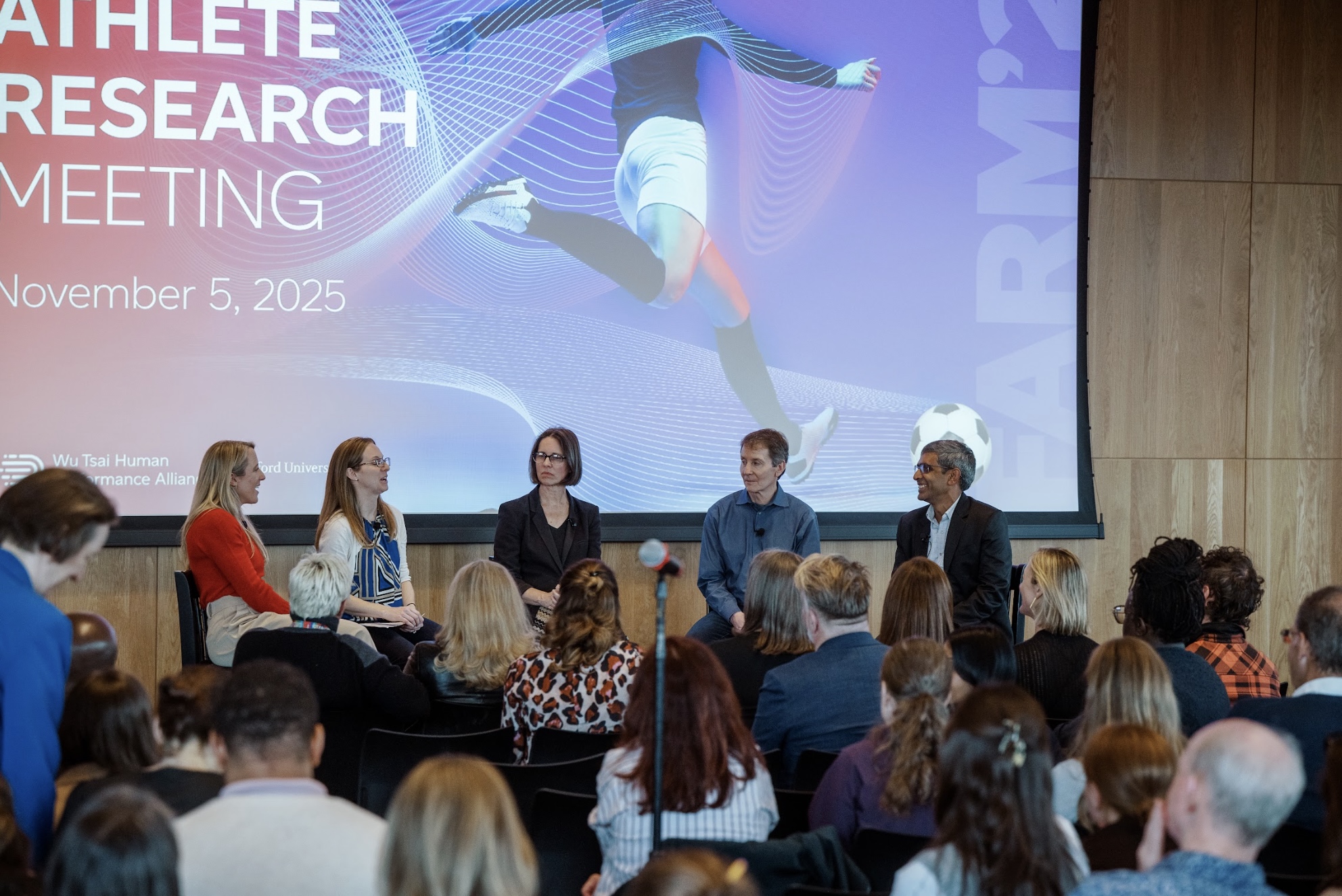
Emily Kraus, Kristen Gravani, Michael Fredericson, Satchin Panda, Erica Sonnenburg at the Female Athlete Research Meeting. Wu Tsai Human Performance Alliance
If you’re a female athlete thinking about nutrition goals for the new year, here’s some good news: the science on fueling for performance is finally getting the attention it deserves, and it has nothing to do with eating less.
In November, researchers, coaches, and athletes gathered at Stanford for the inaugural Female Athlete Research Meeting, a day devoted to advancing women’s performance and health. Hosted by the Wu Tsai Human Performance Alliance, the day covered a wide range of topics, from ACL injury prevention to the molecular science of performance.
During the nutrition session, Emily Kraus, FASTR Program Director and Assistant Professor of Orthopaedic Surgery at Stanford, set the tone: female athlete topics have long been under-researched and misunderstood, but that’s changing. Here are four evidence-based nutrition strategies that stood out from the event:

Want more details about the research studies?
See highlights and recordings from the event.
1. Some Bones Break First. Fuel Enough to Protect Them
For female distance runners, stress fractures are a familiar problem. But here’s something that might change how you think about prevention: not all bones are equally at risk, and the ones most likely to break are the ones most sensitive to underfueling.
Bones like your pelvis and sacrum are rich in trabecular bone: spongy, metabolically active tissue that’s more sensitive to underfueling than denser cortical bone, which dominate in places like your shin. When you’re not eating enough, trabecular bone weakens first. A missing period is another warning sign: underfueling disrupts hormones, which in turn affects bone health.
That’s the idea behind energy availability: you need enough fuel not just to perform, but to support everything happening behind the scenes, including bone health.
Michael Fredericson, Professor of Orthopaedic Surgery at Stanford University, and his colleagues spent seven years testing whether this insight could actually keep runners healthy. In the Healthy Runner Project, they tracked female collegiate runners at Stanford and UCLA, pairing them with dietitians who helped each athlete develop personal nutrition goals based on her training load and eating patterns. The focus was simple: eat sufficiently throughout the day with energy-dense foods, and get enough calcium and vitamin D.
The results, published in BMJ Open Sport & Exercise Medicine, were encouraging. Trabecular bone stress injuries (which correlate with a low energy state) dropped nearly in half. The message: eating enough and well is how you stay in the game.
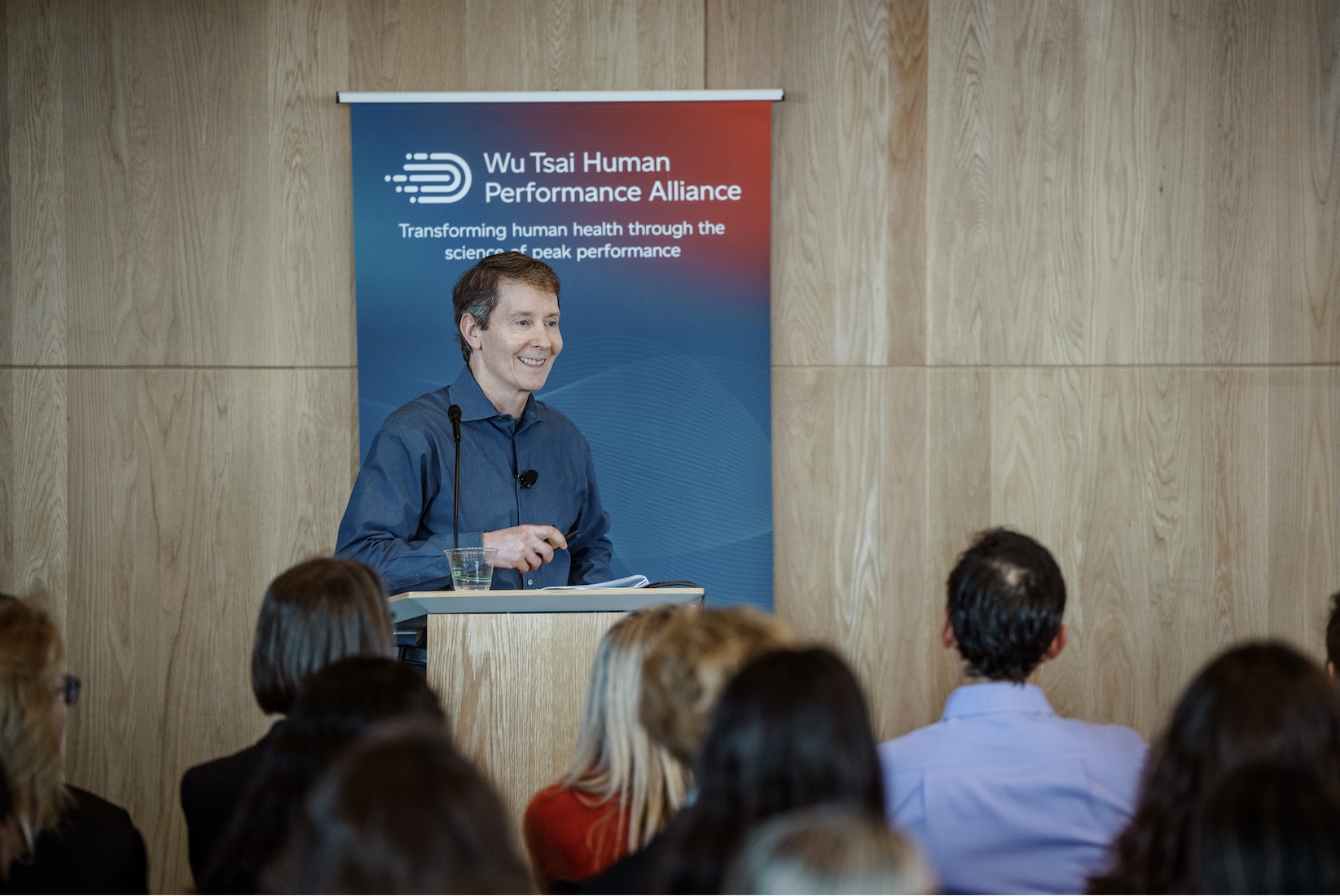
Michael Fredericson presenting his research at the Female Athlete Research Meeting. Wu Tsai Human Performance Alliance
2. Time Your Fuel to Your Body’s Clock
Your body keeps time and expects you to eat by the clock. Within nearly every cell runs a 24-hour biological clock, governing when hormones rise and fall, when metabolism revs up or slows down, and when the body is primed to process fuel versus rest and repair.
Erratic eating patterns can throw that clock off. Researchers call it “eating jetlag“: when inconsistent mealtimes desynchronize your body’s internal rhythms. Your body digests food most efficiently when eaten within a consistent window of 10-12 hours. Eating late at night, when melatonin is rising and your body expects rest, can compromise glucose regulation and fat metabolism.
Much of the research comes from mouse studies. Work by Satchin Panda, Professor at the Salk Institute for Biological Studies, found that mice eating within a defined daily window stayed metabolically healthier than those eating at will, even when diet quality wasn’t perfect.
Human trials comparing specific meal-timing strategies are limited, but the evidence suggests three habits matter most: keeping your daily eating window under 12 hours, front-loading more calories earlier in the day, and avoiding food when melatonin levels are high late at night or very early in the morning.

Importantly, meal timing isn’t about eating less. It’s about when you eat. Adequate fueling remains critical for bone health and performance.
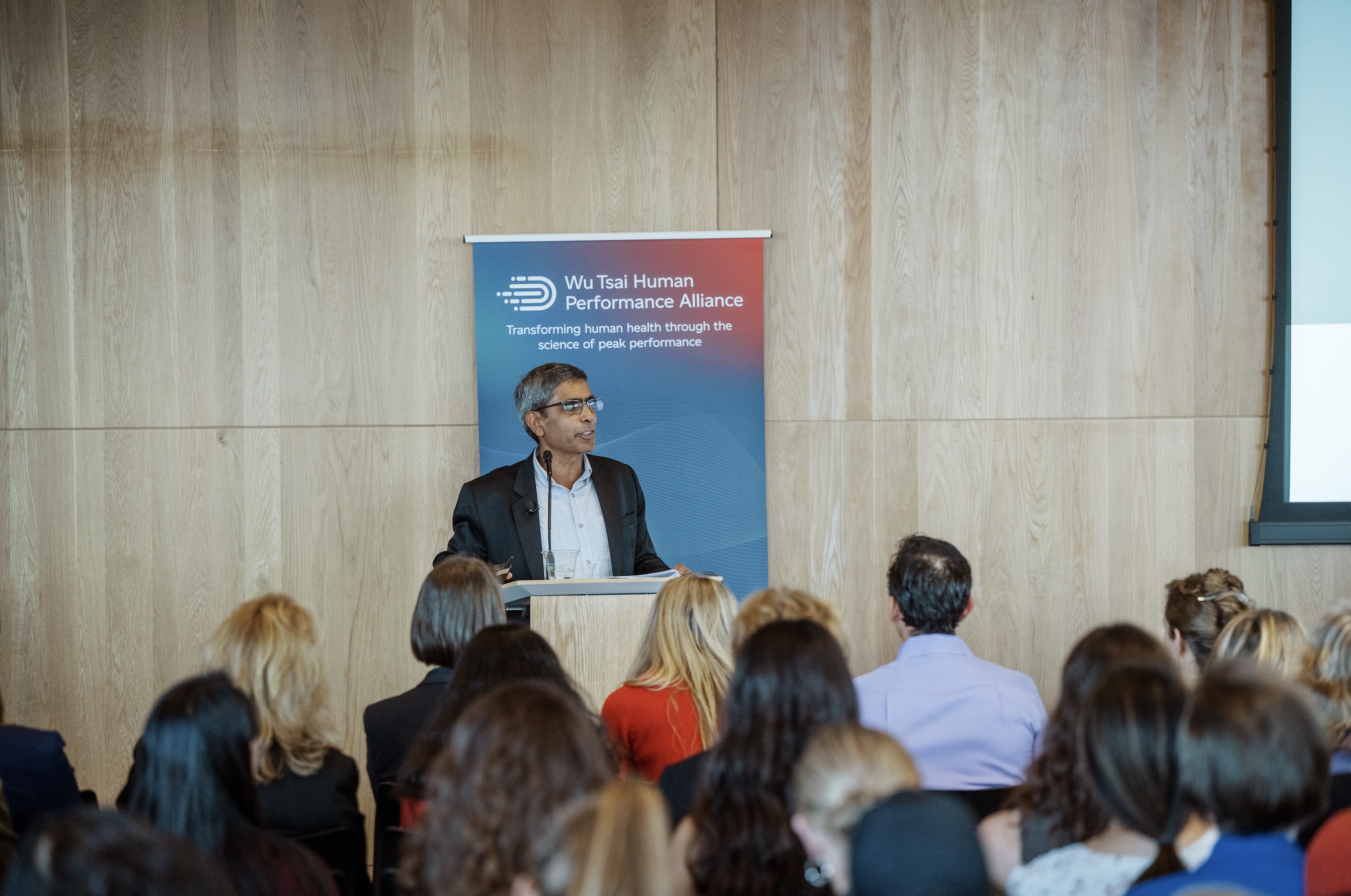
Satchin Panda talked about circadian rhythm and nutrition timing at the Female Athlete Research Meeting. Wu Tsai Human Performance Alliance
3. Feed Your Gut Microbiome
How much and when we eat matters, but so does what we eat: our food choices shape our microbial ecosystem. Erica Sonnenburg, Senior Research Scientist of Microbiology and Immunology at Stanford University, studies how food choices influence the gut microbiome.
The Sonnenburg lab in collaboration with Christopher Gardner’s group designed a trial: 36 healthy adults were randomly assigned to follow one of two diets for 10 weeks. One group ate fermented foods (yogurt, kefir, kimchi, kombucha, and other fermented vegetables), while the other ate high-fiber foods (legumes, seeds, whole grains, nuts, and vegetables).
The results surprised even the researchers. Fermented foods offered a faster route to diversifying gut bacteria and reducing inflammation. Those eating fermented foods showed increased microbial diversity and decreased levels of 19 inflammatory proteins in their blood. Four types of immune cells showed less activation. The study, led by Hannah Wastyk and published in Cell, found a correlation: more fermented foods, more diversity.
The study focused on healthy adults, not athletes specifically, but the findings are suggestive. For athletes looking to manage inflammation, fermented foods may be worth adding to the plate.
The findings don’t diminish fiber’s potential benefits; fiber intake correlates with lower mortality. But if you’re looking for a quick shift in your gut microbiome, fermented foods may have an edge.
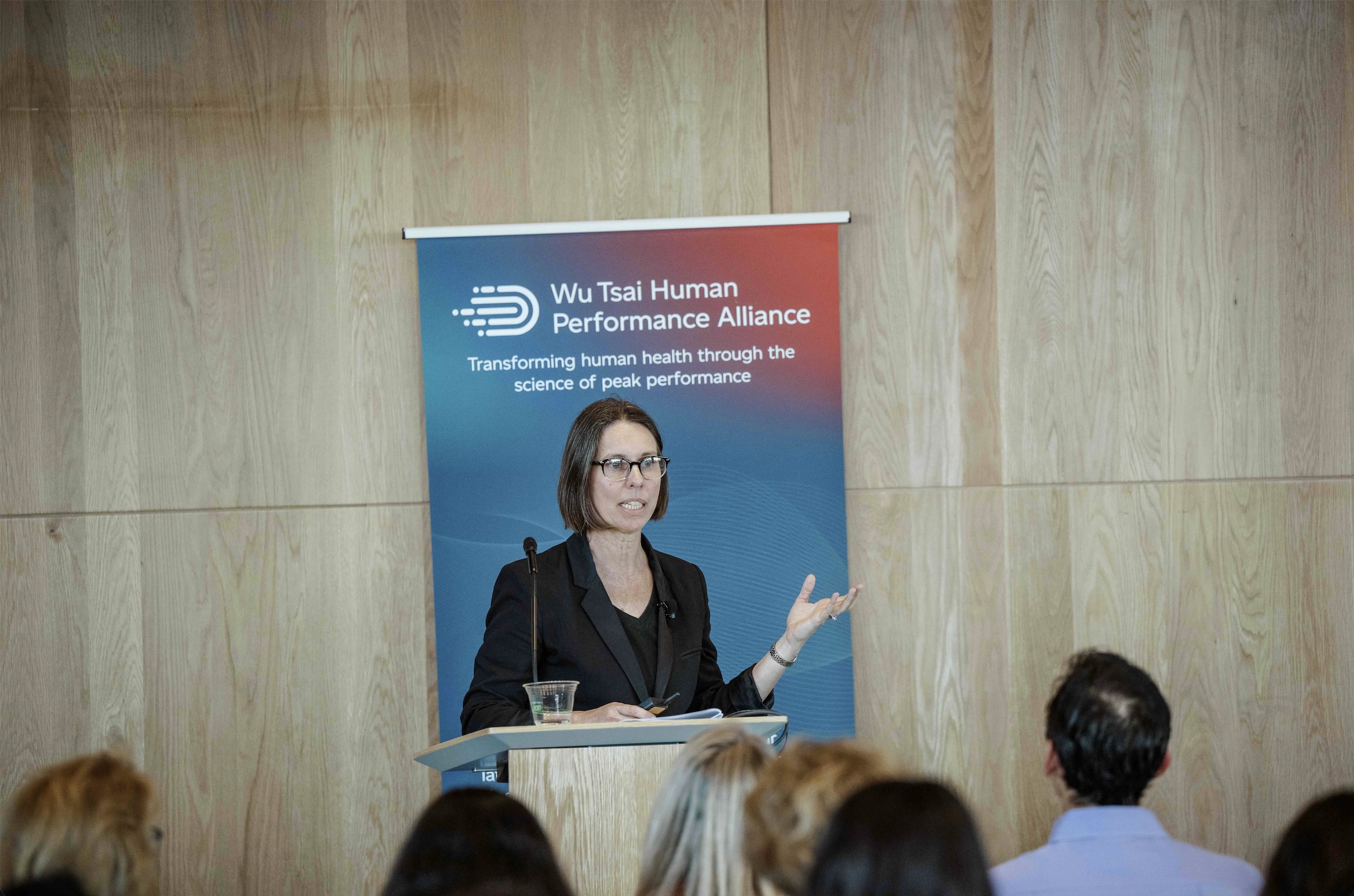
Dr. Sonnenburg shares her research on the role of diet on the human gut microbiota, notably the impact of fermented foods, at the Female Athlete Research Meeting. Wu Tsai Human Performance Alliance
4. Make Fueling a Team Value
Nutrition education doesn’t work in a vacuum. In Fredericson’s Healthy Runner study, athletes at Stanford saw a drop in bone stress injuries while those at another institution did not. At the meeting, he offered a potential explanation: team culture.
At Stanford, coaching and dietitian staff remained stable throughout the seven-year study. Team captains became vocal advocates for the nutrition protocols. Athletes and coaches seemed genuinely committed, and the environment reinforced the message consistently.
At the other institution, staff turned over multiple times. Protocols had to be reintroduced each year, and athletes were slower to commit.
The takeaway: even the best nutritional guidance won’t stick without a culture that values fueling properly. For coaches, that means consistency and buy-in from leadership. For athletes, it might mean advocating for that support or finding teammates who reinforce good habits.

Wu Tsai Human Performance Alliance
Latest News

July 8, 2026
Are your hands too small or is the piano too big?

June 30, 2026
Announcing the 2026 graduate and postdoctoral scholars
June 29, 2026
Call for abstracts: 2026 Wu Tsai Human Performance Alliance Research Symposium
Get Engaged
We invite faculty, students, staff, alumni, friends, and external organizations to participate in the Wu Tsai Human Performance Alliance at Stanford.